Precision cancer surgery for colon cancer is not a single operation or a promise that a robot will improve cancer control. It is a planning process that connects biopsy, scans, tumour biology, surgical anatomy and your overall health to the safest complete treatment. By the end, you will know what to ask a surgeon and hospital before accepting a recommendation.
Key takeaways
- Ask how tumour location determines the segment of colon removed.
- Separate precision treatment planning from the choice of robotic instruments.
- Confirm how stage, obstruction and tumour biology affect treatment order.
- Request the surgeon’s reasoning, alternatives and cancer-control goals.
What precision cancer surgery means before the operation
A colon cancer surgeon in Pune turns test results into a plan by matching the cancer’s anatomy and biology with your health, not by selecting a robot or a branded procedure.
“Precision cancer surgery” is not one standard operation or credential; it means using detailed evidence to decide whether surgery is suitable, how much bowel to remove and when to operate.
1. Confirm the diagnosis. Colonoscopy shows the tumour’s position and extent inside the bowel, while the biopsy identifies cancer and relevant pathological features.
2. Map the disease. Contrast CT scans of the chest, abdomen and pelvis look for spread; MRI can add detail in selected cases. The surgeon reviews tumour location, depth of invasion, nearby lymph nodes, obstruction, perforation and whether the tumour can be completely removed.
3. Add tumour biology. Molecular results, such as mismatch-repair or microsatellite-instability testing, can influence drug treatment and the timing of surgery. A locally advanced tumour, obstruction or perforation may require a different sequence from an uncomplicated, removable tumour.
4. Match treatment to you. Anaesthetic risk, diabetes, heart or lung disease, previous abdominal operations, nutrition and medicines affect the safest approach and recovery plan.
5. Compare realistic options. Ask what operation is proposed, why it fits the findings, whether preoperative treatment is advisable and what open, laparoscopic or robotic alternatives mean. Precision cancer for surgery in Pune should describe this reasoning, not promise superior results because equipment is available.
A second opinion helps when the stage, imaging review and alternatives remain unclear.
Tumour location determines the colectomy and its cancer-control goals
A right-sided tumour may require a right hemicolectomy; a sigmoid tumour may require a sigmoid colectomy. The operation follows the tumour’s segment, blood supply and lymphatic drainage, not the presence of a laparoscopic or robotic platform.
| Operation | Tumour site | Main removal and reconstruction |
|---|---|---|
| Right hemicolectomy | Caecum or ascending colon | Right colon, terminal ileum when necessary, ileocolic vessels and draining lymph nodes; the small bowel is joined to the transverse colon |
| Left hemicolectomy | Descending colon | Left colon, related vessels and lymph nodes; the transverse and sigmoid colon are usually joined |
| Sigmoid colectomy | Sigmoid colon | Sigmoid segment, its vascular pedicle and regional lymph nodes; the descending colon is joined to the rectum |
| Transverse colectomy | Transverse colon | The involved transverse segment, associated vessels and lymph nodes; the remaining colon is reconnected when safe |
| Subtotal or total colectomy | Multiple tumours, extensive disease or severe colon damage | Most or all of the colon, with reconstruction or a stoma selected for safety |
A colon cancer surgeon in Pune must remove the tumour with a clear margin, the relevant draining lymph nodes and the vascular tissue that carries them. If the tumour has grown into an adjacent organ, removing the involved structures together in one specimen can prevent tumour spillage.
The specimen must remain intact for pathology, which measures margins, tumour depth and lymph-node involvement.
Ask a gastrointestinal cancer surgeon in Pune which segment is involved, how many lymph nodes are expected for assessment, and whether a join or temporary stoma is safest. Bulkier, fixed or perforated tumours can make an open operation the better route.
Why precision planning is different from robotic surgery
Precision cancer surgery in Pune is a planning method, not a machine. The surgeon chooses open, laparoscopic or robotic colectomy only after confirming that the operation can remove the tumour with an adequate margin, the relevant draining lymph nodes and an intact specimen for pathology.
| Approach | What it offers | When it may apply |
|---|---|---|
| Open colectomy | Direct access through one larger incision | Large or fixed tumours, dense adhesions, difficult anatomy, emergency obstruction or perforation, or when minimally invasive access cannot achieve safe resection |
| Laparoscopic colectomy | Small incisions using long instruments and a camera | Planned surgery when imaging shows resectable disease and the surgeon has suitable experience |
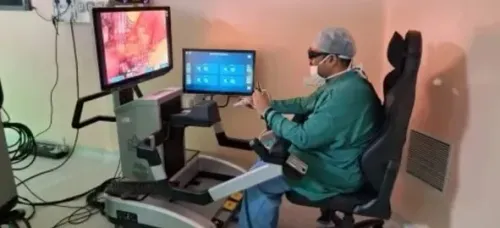
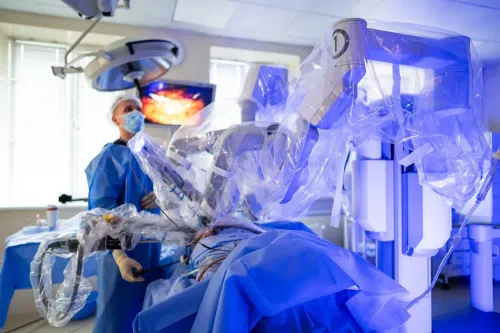
| Robotic colectomy | A computer-assisted instrument platform with wristed tools and magnified vision | Selected planned cases where the platform helps with access, dissection or suturing; it does not guarantee better cancer control |
The decision also accounts for previous abdominal operations, tumour size and fixation, anaesthetic risk, available equipment and the surgeon’s experience with that specific colectomy. Conversion from laparoscopic or robotic surgery to open surgery is a safety decision if bleeding, adhesions or unclear cancer planes prevent complete removal.
Mismatch-repair or microsatellite-instability results can guide Lynch-syndrome assessment and drug treatment, but they do not choose the surgical platform. If a recommendation labelled colon cancer surgeon precision cancer for surgery in Pune omits stage, imaging review, alternatives and conversion risks, seek a second opinion.
How stage, obstruction and tumour biology change the treatment sequence
Surgery is not automatically the first treatment at every stage. Stage I and many stage II cancers usually proceed to colectomy first; chemotherapy follows stage II surgery when pathology shows high-risk features. Stage III treatment commonly combines surgery with postoperative chemotherapy.
Stage IV disease may need systemic treatment before surgery when metastases are unresectable, while resectable liver or lung metastases can lead to a planned combination of chemotherapy and operations.
Obstruction or perforation changes the sequence immediately. A blocked colon may require an urgent resection, a stent, or a diverting stoma before definitive surgery; perforation can require emergency source control and antibiotics. These situations can limit minimally invasive options and postpone chemotherapy until recovery.
A practical treatment sequence is:
1. Confirm stage with colonoscopy, biopsy, CT scans and, when indicated, MRI or liver imaging. Ask whether the tumour is resectable and whether distant disease is present.
2. Check tumour biology. Mismatch-repair or microsatellite-instability testing can identify Lynch-syndrome risk and support immunotherapy decisions, particularly in advanced or locally advanced disease. RAS, BRAF and HER2 results mainly guide drugs for metastatic cancer; they do not choose robotic versus open surgery.
3. Review the plan in a multidisciplinary team. Precision cancer surgery in Pune should mean staging and biology informing the timing, not a promise that surgery comes first. A gastrointestinal cancer surgeon in Pune should explain why each sequence fits your tumour, obstruction status and health.
How to assess a precision-surgery recommendation in Pune
Choose a recommendation you can trace from evidence to operation, not one justified by the label “precision.” A colon cancer surgeon in Pune should show how your colonoscopy, biopsy, CT or MRI, stage, tumour position, health conditions and molecular results support the proposed resection.
Verify the hospital pathway includes:
- Expert gastrointestinal pathology reviewing the biopsy and lymph nodes
- Anaesthesia, intensive-care and emergency surgical support
- Medical and radiation oncology
- Interventional radiology when drainage or vascular procedures are needed
- A multidisciplinary tumour board discussing your case
A gastrointestinal cancer surgeon in Pune should state formal specialty training, current hospital privileges, personal experience with the proposed operation, conversion and complication rates, and the plan for emergencies after discharge. Check registration through the National Medical Commission’s Indian Medical Register.
Dr Lalit Banswal is one doctor you can ask these operation-specific questions of; compare documented answers rather than equipment lists.
| Option | What to verify | Main trade-off |
|---|---|---|
| Open colectomy | Why a larger incision offers safer complete removal | More wound recovery |
| Laparoscopic or robotic colectomy | Whether access remains suitable for tumour size, fixation and your health | Smaller incisions do not guarantee better cancer control |
| Preoperative therapy or a second opinion | Stage, molecular results and the reason surgery is delayed | Treatment takes longer before resection |
Ask how the bowel will be joined, whether a temporary or permanent stoma is possible, what raises leak risk, and how long recovery may take. Request written warning signs and the contact number for fever, worsening pain, vomiting or a change in stoma output.
Related services
Gastrointestinal Cancer Surgeon In Pune Gastrointestinal Cancer Surgeon In Pune Gastrointestinal (GI) Cancer is one of the most complex and challenging cancers that affect the organs of the digestive system, including the... View service → |
Robotic Cancer Surgery In Pune Robotic Cancer Surgery In Pune Robotic Cancer Surgery in Pune: In today’s medical landscape, surgical procedures have evolved significantly, offering patients various treatment... View service → |
Frequently asked questions
What does precision cancer surgery mean before a colon operation?
It means matching scan findings, biopsy results, tumour biology, your health and cancer-control goals to a specific treatment plan before surgery.
How does tumour location determine the colectomy?
The tumour’s position determines which section of colon and nearby lymph nodes require removal, along with the operation’s cancer-control goals.
Is precision cancer surgery the same as robotic surgery?
No. Precision surgery describes the decision-making and planning process; robotic surgery describes the equipment and technique used to perform an operation.
How do stage and bowel obstruction change treatment sequence?
Stage, obstruction and tumour biology can change whether surgery comes first or follows chemotherapy, radiation, decompression or other stabilising treatment.
How can you assess a precision-surgery recommendation in Pune?
Ask the colon cancer surgeon to explain the tumour location, planned resection, lymph-node goals, treatment sequence, alternatives, risks and expected recovery.
Keywords