
A screening result can identify a concern, but it rarely contains enough information to plan a cancer operation. You will be able to distinguish screening from diagnosis, identify the reports a surgeon needs, and judge whether the next step is surgery, further treatment, surveillance or a biopsy.
Key takeaways
- An abnormal screening result needs diagnostic confirmation before surgery is considered.
- Collect imaging, biopsy, blood-test and prior-treatment reports for surgical review.
- A multidisciplinary team matches the tumour, stage and your health to an operation plan.
- Compare open, laparoscopic and robotic surgery by safety, access and recovery—not technology alone.
What does an abnormal screening result actually mean?
An abnormal screening result is a signal for diagnostic evaluation, not proof of cancer and not permission to book surgery. Screening tests look for disease in people without symptoms; diagnostic tests investigate a symptom or suspicious finding.
The phrase cancer screening in Pune therefore describes an organised pathway, not a standard package of scans, tumour-marker blood tests or whole-body imaging for everyone.
- Confirm the finding with the appropriate test. A positive faecal immunochemical test requires diagnostic colonoscopy, not immediate bowel surgery. An abnormal mammogram, ultrasound or scan may require targeted imaging rather than a larger scan.
- Obtain tissue when it will change treatment. A biopsy identifies the cancer type and grade, but some lesions need endoscopic sampling, image-guided biopsy or removal for complete examination.
- Have a pathologist review the specimen. The report should name the tumour, grade and relevant biomarkers; a second review helps when the diagnosis is unusual or treatment carries major consequences.
- Establish clinical stage before discussing an operation. Depending on the cancer, this may include contrast CT, MRI, endoscopy or selected PET-CT, followed by assessment of TNM stage and resectability.
A normal result reduces risk; it cannot rule out every cancer. Persistent symptoms, strong family history, inflammatory bowel disease, cirrhosis, chronic viral hepatitis or a previous cancer require risk-based surveillance, even after a normal screen. Ask for a plan that matches your age, symptoms, history and prior results rather than accepting a one-size-fits-all package.
Which reports are needed before precision surgery can be planned?
A surgeon needs more than a positive screening report: the team must confirm what the tumour is, where it is, how far it has spread and whether your body can tolerate treatment. The file usually includes:
- Biopsy type and the complete pathology report, including tumour type, grade and relevant biomarkers.
- Tumour location, measured size and TNM stage.
- Contrast CT of the chest, abdomen and pelvis, plus blood tests and relevant medical history.
- Site-specific tests such as liver MRI, pelvic MRI for rectal cancer, pancreas-protocol CT or MRI, endoscopic ultrasound, colonoscopy or upper endoscopy.
| Test | What it clarifies | Why it changes surgery |
|---|---|---|
| Pelvic MRI | Rectal tumour height, mesorectal nodes, sphincter involvement, threatened circumferential resection margin and extramural vascular invasion | A colonoscopy finding alone cannot determine the operation or whether treatment before surgery is needed |
| Pancreas-protocol CT or MRI | Tumour contact with major arteries and veins, plus distant disease | Defines resectable, borderline-resectable or locally advanced disease; tumour diameter alone is not enough |
| Liver MRI | Number, position and vascular relationships of liver lesions | Shows whether removal is possible while leaving a safe future liver remnant |
| Staging laparoscopy | Small peritoneal deposits or surface-liver spread | Can prevent a major operation that would not achieve a curative result |
PET-CT is selective, not automatic, for gastrointestinal cancers. Staging laparoscopy can find abdominal spread that scans miss.
In practice, precision cancer surgery cancer screening in pune means combining pathology, anatomy and stage—not booking surgery after cancer screening in pune. The plan should state resectability, margins, lymph nodes and alternatives such as chemotherapy or radiation first.
How does a multidisciplinary review turn results into an operation plan?
A multidisciplinary review turns test results into a sequence, not merely a decision to operate. The surgeon, radiologist, pathologist, medical oncologist, radiation oncologist, anaesthetist and relevant support teams test whether the proposed operation matches the tumour and the patient.
1. Confirm the working diagnosis and clinical TNM stage, then classify technical resectability by anatomy and biological resectability by tumour behaviour, biomarkers and distant spread.
2. Define the operation’s aim: cure, control or palliation. Record the margin strategy, lymph-node assessment, organ-preservation goals, expected functional effects and the findings that would stop or alter the operation.
3. Use pelvic MRI in rectal cancer to assess tumour height, circumferential resection margin, extramural vascular invasion, mesorectal nodes and sphincter involvement. These findings can move treatment from immediate surgery to chemotherapy, radiation or organ-preservation assessment.
4. Check mismatch-repair or microsatellite-instability status in colorectal cancer. In selected pancreatic cancers, germline and tumour testing can identify inherited risk, support genetic counselling, or influence targeted treatment and surgical timing.
The team also addresses anaemia, malnutrition, diabetes, smoking, jaundice, anticoagulants, frailty and heart or lung disease. Optimisation, nutritional support, biliary drainage, medication changes or staged treatment may be safer than immediate surgery. That is precision cancer surgery in Pune: a plan built from pathology, anatomy, biology, fitness and patient goals, not a scan alone.
Which screening findings lead to surgery, and which do not?
A screening finding leads to surgery only after cancer is confirmed, the stage is complete, and the disease is technically and biologically resectable. A precision cancer surgery cancer screening in Pune pathway is not a direct route from an abnormal report to an operating room.
| Finding | Usual next decision | What it does not prove |
|---|---|---|
| Biopsy-confirmed, resectable cancer | Discuss surgery after staging and fitness assessment | That surgery is the first treatment |
| Borderline-resectable tumour or threatened margin | Consider chemotherapy, radiation or both before surgery | That immediate resection will achieve a safe margin |
| Positive faecal immunochemical test | Arrange diagnostic colonoscopy | That bowel cancer exists or requires immediate surgery |
| Indeterminate nodule, polyp, cyst or scan abnormality | Use repeat imaging, endoscopy, needle biopsy or surveillance | That the lesion is malignant |
| Normal screen with persistent symptoms or high-risk history | Continue diagnostic review or risk-based surveillance | That cancer has been excluded |
Cancer screening in Pune can identify a person who needs investigation, not a person cleared for major surgery. A rectal lesion found on colonoscopy still needs pelvic MRI; tumour height, sphincter involvement, mesorectal nodes, extramural vascular invasion and a threatened circumferential margin can change treatment order.
A credible written plan should state:
- Working diagnosis, biopsy and TNM stage
- Technical and biological resectability
- Proposed margins and lymph-node strategy
- Alternatives, including neoadjuvant treatment
- Expected bowel, urinary or sexual effects
- Possible stoma or conversion to open surgery
- Findings that would make the team stop or change the operation
How should you compare open, laparoscopic and robotic surgery after screening?
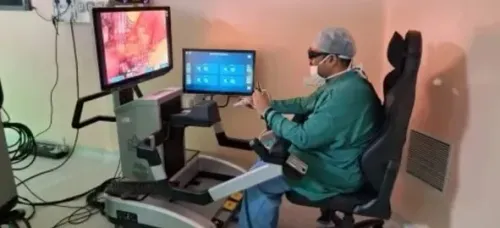
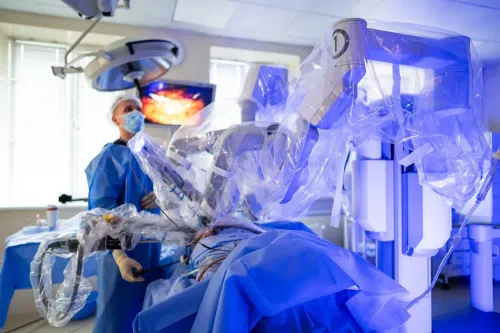
Robotic surgery is not automatically the most precise choice. Open, laparoscopic and robotic surgery are access methods; none replaces pathology, TNM staging, sound margins, appropriate lymph-node dissection or surgical judgment. A search for precision cancer surgery cancer screening in Pune should lead to this full assessment, not a procedure selected from a screening report.
| Option | Main advantage | What can change the decision |
|---|---|---|
| Open | Direct access for extensive or complex disease | Tumour spread, vascular involvement, combined-organ resection or reconstruction |
| Laparoscopic | Smaller incisions in selected operations | Previous operations, difficult anatomy, longer operating time or conversion |
| Robotic | Wristed instruments and visual control in selected confined spaces | Equipment cost, anaesthesia fitness, tumour extent and the need for open access |
Minimally invasive surgery can reduce incision size and support recovery, but it can take longer, cost more and require conversion to open surgery. The right approach depends on whether the tumour is technically and biologically resectable, the planned margin and nodes, and whether chemotherapy or radiation should come first.
Take these questions to a Pune surgical oncology consultation:
- What is the confirmed diagnosis and TNM stage?
- Is the tumour technically and biologically resectable?
- What is the margin and lymph-node plan?
- Is treatment before surgery preferable?
- What would change the approach?
For complex gastrointestinal or hepatopancreatobiliary findings, Dr Lalit Banswal can help review these factors rather than treating “precision cancer surgery in Pune” as a single operation.
Related services
Cancer Screening In Pune Cancer screening plays a crucial role in early detection, significantly improving treatment outcomes and survival rates. Dr. View service → |
Genetic Cancer Testing Genetic cancer testing is a powerful tool that helps assess an individual’s risk of developing cancer by identifying specific genetic mutations. View service → |
Frequently asked questions
What does an abnormal cancer screening result mean?
It signals the need for diagnostic evaluation. It does not prove cancer or mean you should book surgery.
Which reports are needed before precision cancer surgery can be planned?
Bring screening reports, diagnostic imaging, pathology or biopsy results, blood tests, previous medical records and medication details.
How does multidisciplinary review shape the operation plan?
Surgeons, oncologists, radiologists, pathologists and other specialists review the evidence to confirm diagnosis, stage disease and select treatment.
Which screening findings lead to surgery, and which do not?
Surgery follows confirmed disease when removal offers a clear benefit. Benign findings, uncertain results or disease better treated another way do not automatically lead to surgery.
How should you compare open, laparoscopic and robotic surgery?
Compare each approach by tumour location, disease extent, surgeon experience, safety, recovery and the likelihood of complete cancer removal.
Related services
Lung Cancer Treatment In Pune Best Lung Cancer Treatment In Pune - Dr Lalit Banswal When it comes to advanced Lung cancer Treatment in Pune, Dr. View service → |
Cancer Specialist In Pune Best Cancer Specialist in Pune Dr. Lalit Banswal is a highly experienced and renowned Cancer Specialist in Pune, known for his expertise in surgical... View service → |
Keywords