Travelling from Saswad for cancer surgery means comparing more than a doctor’s title or a hospital’s technology. By the end, you will have a practical way to check qualifications, confirm the treatment plan, compare surgical risks and organise safe care before and after an operation in Pune.
Key takeaways
- Verify the surgeon’s current registration in the National Medical Commission’s Indian Medical Register.
- Ask how many operations matching your tumour and procedure the team performs.
- Request the proposed operation, alternatives, risks and recovery plan in writing.
- Plan Saswad-to-Pune travel for consultations, admission, discharge and follow-up visits.
Check training, tumour-specific experience and travel practicality
A suitably qualified cancer surgeon in Saswad is identified by verified registration, formal training and experience with your exact operation—not by the label “cancer specialist.” Search the doctor’s name in the National Medical Commission’s Indian Medical Register and confirm current registration. Then look for recognised surgical oncology training.
A broad claim such as “cancer specialist in Pune” does not show what the surgeon is trained to perform.
| Operation | Experience to ask about |
|---|---|
| Whipple procedure | Number performed by the surgeon and hospital each year |
| Liver resection | Experience with the tumour type, extent of resection and vascular involvement |
| Rectal cancer surgery | Rectal cancer volume, pelvic surgery experience and multidisciplinary planning |
| Stomach or bowel resection | Annual major cancer-resection volume and lymph-node outcomes |
| Vascular reconstruction | Frequency of combined cancer and blood-vessel procedures |
Ask for the hospital’s annual volume for the proposed operation, not only the surgeon’s total operation count. Also request rates for major complications, unplanned reoperation and 30-day mortality. Routine laparoscopic surgery does not establish competence in complex pancreatic, liver, bowel or vascular cancer surgery.
Assess whether the hospital is workable from Saswad:
- Calculate realistic door-to-door travel time, including traffic.
- Check parking, ambulance access and emergency return routes.
- Plan transport for consultations, scans, wound or drain reviews and pathology discussions.
- Confirm where emergency readmission will occur and who answers urgent calls after discharge.
A distant hospital can still be safer for complex surgery, but only with a reliable travel and follow-up plan.
Match each stage of care to the right cancer specialist
The lead specialist depends on the treatment stage. A surgical oncologist assesses whether cancer can be removed; diagnosis and stage must be confirmed through pathology and reviewed imaging before that decision.
| Specialist | Leads | What to confirm |
|---|---|---|
| Surgical oncologist | Cancer surgery | Resectable disease, margins and lymph-node plan |
| Medical oncologist | Chemotherapy, targeted therapy or immunotherapy | Whether drug treatment comes before surgery |
| Radiation oncologist | Radiotherapy | Target, dose and timing |
| General surgeon | Non-cancer conditions and selected cancer operations | Experience with this tumour and procedure |
| “Cancer physician” | No defined specialist role | Exact qualification and treatment responsibility |
For major gastrointestinal, liver, pancreas or bile-duct cancer, request a multidisciplinary review involving surgery, radiology, pathology and medical oncology, with radiation oncology, gastroenterology and specialist nursing when needed. Searching for a surgical oncologist in Saswad or a cancer specialist in Pune should lead to this team-based review, not a single opinion alone.
Carry these records from Saswad:
- Biopsy, histopathology and immunohistochemistry reports
- CT or MRI reports and image discs, plus PET-CT results
- Blood tests, medication lists and previous treatment notes
Ask whether pathology will be re-reviewed, whether scans show resectable disease and whether a tumour-board meeting is needed. For rectal cancer, ask for pelvic MRI review. For pancreatic disease, ask about vascular involvement and whether chemotherapy, with or without radiation, should come first. Confirm fitness for anaesthesia before surgery.
Use the first consultation to test the proposed operation
Before agreeing to surgery, ask what the operation is meant to achieve: cure, control of symptoms, removal of all visible disease, or preparation for further treatment. A cancer surgeon in Saswad or surgical oncologist in Saswad should explain why surgery is needed now, what alternatives exist, and whether chemotherapy or radiation should come first.
Ask these questions and request written answers:
- What is the procedure’s full name? Which organs, lymph nodes and margins will be removed?
- For bowel or rectal surgery, what is the chance of a temporary or permanent stoma?
- For upper gastrointestinal or pancreatic surgery, will you need feeding tubes, drains or reconstruction?
- How long will you stay in hospital? Could you need intensive care? What restrictions will apply during recovery?
- Will pathology results determine chemotherapy, radiation or another treatment after surgery?
- If liver metastases are present, can resection or ablation treat all visible disease while leaving enough functioning liver?
Compare the approaches against the tumour and your health, not the newest equipment.
| Approach | Base the decision on | Important question |
|---|---|---|
| Open | Tumour size, spread, anatomy, previous operations and fitness | Will this provide the safest complete removal? |
| Laparoscopic | Tumour location, stage, anatomy and surgeon experience | Could conversion to open surgery be necessary? |
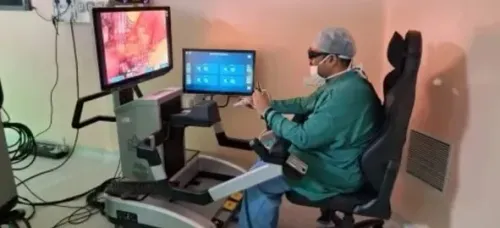
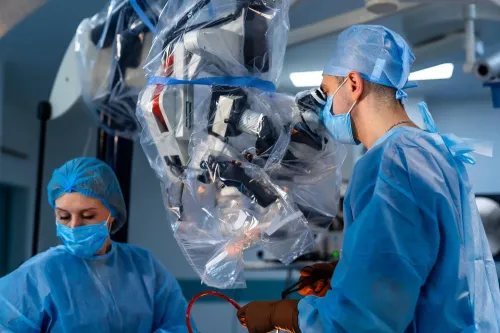
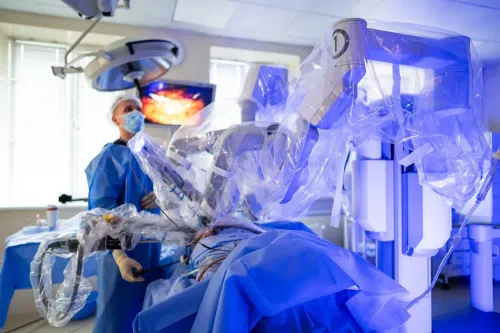
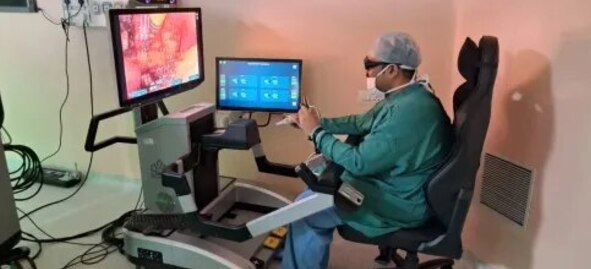
| Robotic | The same cancer and patient factors, not the technology label | Will margins and lymph-node clearance match accepted cancer standards? |
Minimally invasive surgery can reduce wound problems in selected patients, but conversion to open surgery remains possible. Ask for the expected cancer margin and lymph-node clearance before choosing an approach.
Compare outcomes, safety systems and the team behind the operation
Judge safety by procedure-specific results and escalation capacity, not by a claim to be the best cancer specialist in Pune.
| Measure | Ask for | Warning sign |
|---|---|---|
| Major complications | Rate for the proposed operation | Only hospital-wide figures |
| Conversion | Laparoscopic or robotic-to-open rate | “Never happens” |
| Recovery failures | Unplanned reoperation and readmission rates | No written figures |
| Mortality | 30-day mortality for that procedure | Vague reassurance |
Ask how many operations of the proposed type the surgeon and hospital perform each year. Verify who will operate, where surgery will occur, which anaesthetist is responsible and whether 24-hour surgical and anaesthesia cover, an ICU, blood components, endoscopy and interventional radiology are available.
Ask where specialist pathology is performed and who reviews the final report. It should state margins, lymph-node count and involvement, grade, depth of invasion, lymphovascular invasion, perineural invasion and, when relevant, mismatch-repair or microsatellite-instability status.
Ask how the team handles bleeding, bile leaks, pancreatic fistulas and sepsis, including emergency readmission after discharge. Confirm that Enhanced Recovery After Surgery covers:
- Avoiding unnecessarily prolonged fasting
- Opioid-sparing, multimodal pain relief
- Early movement and eating when safe
- Blood-clot prevention
A laparoscopic or robotic label does not prove safer cancer care; conversion remains possible, and margins and lymph-node clearance still matter. A surgical oncologist in Saswad should explain these figures through a multidisciplinary team, not a technology label alone.
Build a Saswad-to-Pune plan before you consent
Before consenting, obtain a written Saswad-to-Pune plan covering the diagnosis and stage, intended operation, alternatives, expected hospital stay, possible stoma or feeding tube, pathology review, further treatment and follow-up schedule.
| Arrangement | Confirm before surgery | Why it matters |
|---|---|---|
| Emergency care | Readmission hospital, 24-hour surgical and anaesthesia cover, ICU, blood components, endoscopy and interventional radiology | Fever, worsening abdominal pain, vomiting, bleeding, breathlessness or wound problems need rapid escalation |
| After-discharge contact | The named person who answers urgent calls and how quickly you can return to the operating hospital | Delayed advice can turn a manageable complication into sepsis or reoperation |
| Local follow-up | Whether drains, wounds, scans and pathology reviews can be managed near Saswad | You may otherwise need repeated Pune journeys |
| Recovery support | Transport and a caregiver for the first postoperative period | Weakness, pain and medication effects can make travel unsafe |
Ask exactly how soon you must reach Pune if any warning symptom appears, and identify the route, vehicle and backup driver before admission. For major gastrointestinal, liver, pancreas or bile-duct surgery, confirm that a multidisciplinary team has reviewed the scans and pathology.
When considering Dr Lalit Banswal, apply the same checks: document the proposed operation, hospital location, multidisciplinary review, named operating team, emergency pathway and procedure-specific outcomes. A consultation has done its job when it leaves you with written answers and a route from diagnosis through recovery and additional cancer treatment.
Related service
Cancer Specialist In Pune Best Cancer Specialist in Pune Dr. Lalit Banswal is a highly experienced and renowned Cancer Specialist in Pune, known for his expertise in surgical... View service → |
Frequently asked questions
How do you check whether a cancer surgeon in Saswad is properly qualified?
Search the doctor’s name in the National Medical Commission’s Indian Medical Register, confirm current registration and review formal surgical oncology training.
When should you choose a cancer specialist in Pune instead of local care?
Compare tumour-specific experience, the required operation, available support services and the practical travel demands between Saswad and Pune.
What should you ask during the first surgical oncology consultation?
Ask for the exact diagnosis, proposed operation, alternatives, expected benefits, major risks, recovery timeline and the team responsible for each stage of care.
How can you compare surgical cancer teams safely?
Ask about experience with your exact operation, complication monitoring, intensive care access, anaesthesia support, pathology review and follow-up arrangements.
Keywords