A biopsy-confirmed colon tumour does not always lead to the same operation or treatment sequence. By reviewing the warning signs, staging tests, tumour location, surgical methods and surgeon-selection questions, you can understand when gastrointestinal surgery is urgent, planned or not the first step.
Key takeaways
- Operable invasive colon cancer usually requires removal of the tumour-bearing segment and regional lymph nodes.
- CT staging, colonoscopy, biopsy and blood tests help determine whether surgery comes first.
- Tumour location determines which colon segment, blood vessels and lymph nodes are removed.
- Compare surgeons by case experience, staging decisions, complication planning and follow-up care.
Which colon-cancer findings make surgery necessary?
A biopsy-confirmed invasive colon tumour that is operable usually requires an oncologic colectomy: removal of the tumour-bearing colon segment, its mesentery, vascular supply and regional lymph nodes. Stage I–III disease is usually treated this way, with bowel reconnection when it is safe. Removing only the visible lump is not adequate cancer surgery.
| Finding | Usual priority | What changes the plan |
|---|---|---|
| Stage I–III colon cancer | Planned colectomy | Remove the involved segment and regional nodes |
| Unresectable stage IV, asymptomatic primary | Systemic therapy first | Chemotherapy, targeted therapy or immunotherapy may control widespread disease before local treatment |
| Obstruction, perforation, peritonitis or uncontrolled bleeding | Urgent treatment | Resection, a temporary or permanent stoma, or a selected left-sided decompressive stent may be needed |
| Locally advanced growth or recurrence | Complex planned or urgent surgery | Invasion or a local complication may require multivisceral resection or emergency control |
Limited liver or lung metastases do not automatically rule out surgery. After multidisciplinary review, metastasectomy, ablation or stereotactic radiotherapy can be considered, often after systemic treatment.
A colon cancer surgeon in Pune or gastrointestinal cancer surgeon in Pune should also establish whether the tumour is rectal. Rectal cancer often requires pelvic MRI, different operations and possible preoperative chemotherapy or radiotherapy; it does not follow the same sequence as colon cancer.
Which tests determine whether surgery comes first?
Colonoscopy with biopsy confirms whether the lesion is cancer. A contrast CT of the chest, abdomen and pelvis maps lymph nodes, liver, lungs and other spread; pelvic MRI is added when rectal involvement is suspected.
Complete blood count, liver and kidney function tests assess fitness for treatment, while carcinoembryonic antigen (CEA) provides a baseline for follow-up.
| Choice | What the team is deciding | When it applies |
|---|---|---|
| Surgery first | Remove an operable tumour | Localised colon cancer without a reason for preoperative treatment |
| Chemotherapy first | Control disease before resection | Selected advanced or high-risk disease |
| Radiotherapy | Reduce local pelvic recurrence | Mainly rectal, not routine colon, cancer |
| Immunotherapy | Treat susceptible tumour biology | Suitable advanced cancers with mismatch-repair deficiency or microsatellite instability |
| Observation | Avoid immediate treatment after complete removal | Selected early lesions or post-treatment surveillance |
Mismatch-repair or microsatellite-instability testing can identify possible Lynch syndrome, alter stage II chemotherapy discussions and predict benefit from immune-checkpoint treatment in suitable advanced disease. Whether you see a GI cancer surgeon in Pune or a cancer specialist in Pune, ask how the result changes your plan.
Stage II cancer does not automatically require chemotherapy. The discussion considers:
- T4 invasion, obstruction or perforation
- Fewer than 12 examined lymph nodes
- Lymphovascular or perineural invasion
- Selected poorly differentiated tumours
- Tumour budding and other molecular findings
Observation is not a default substitute for surgery in an invasive, operable tumour. It fits completely removed early lesions or surveillance after treatment.
How does tumour location change the operation?
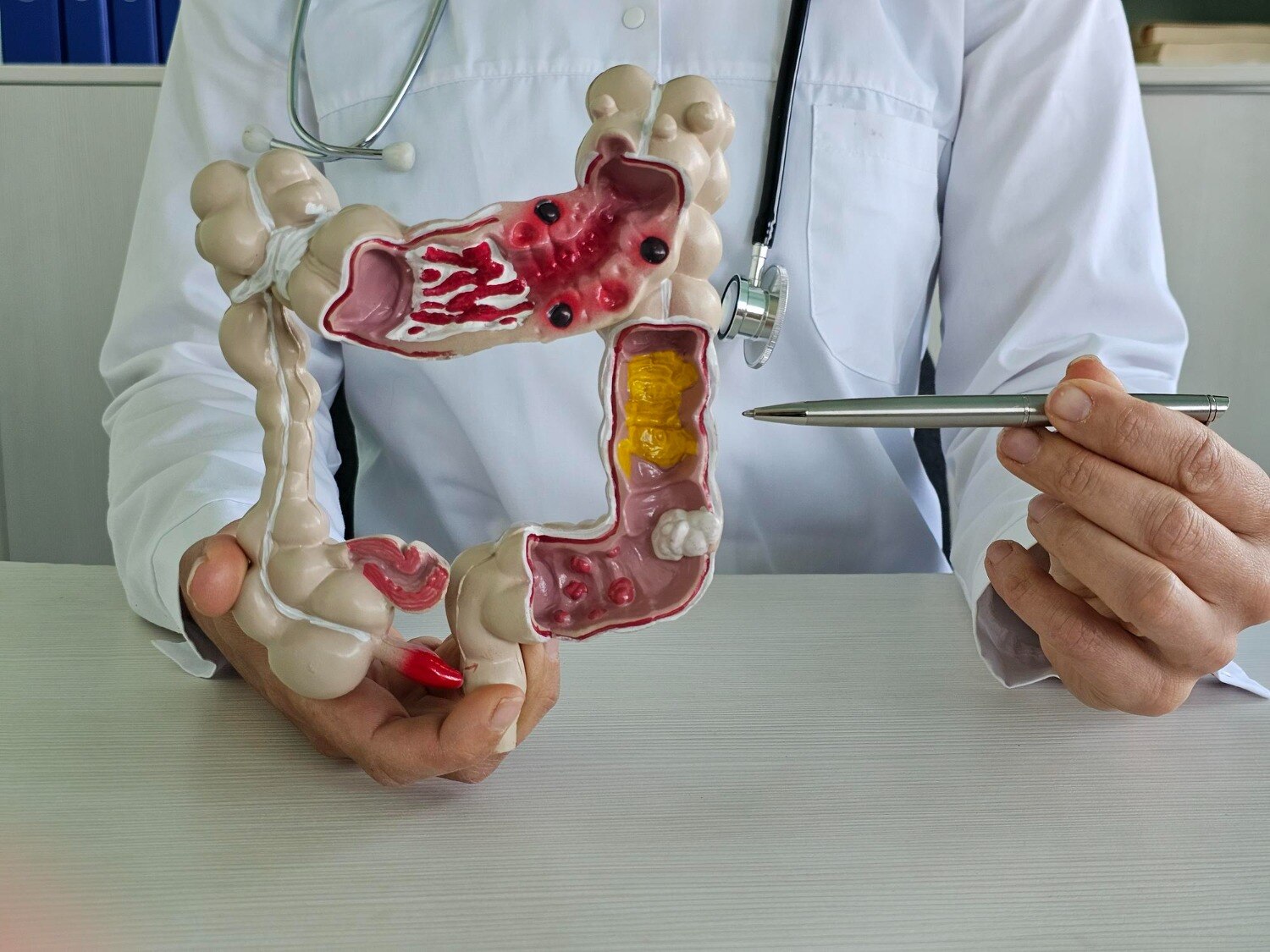
A right-sided tumour usually calls for a right hemicolectomy: removal of the caecum, ascending colon and part of the transverse colon, with the ileocolic and right colic vessels, mesentery and regional lymph nodes.
A transverse tumour may need a segmental transverse colectomy when margins and blood supply remain adequate, or an extended resection when its drainage or extent crosses into the right or left colon.
Left-sided tumours are treated with a left hemicolectomy, removing the descending colon and adjoining transverse or sigmoid colon with the relevant vascular pedicle, mesentery and nodes. A sigmoid tumour requires sigmoid colectomy and removal of its draining vessels, mesentery and regional nodes.
The visible lump is not the whole specimen: lymphatic drainage determines the oncologic resection.
- Ask whether the planned specimen includes clear margins, the correct vascular supply and at least 12 regional lymph nodes; fewer than 12 creates a staging-quality concern.
- Expect an anastomosis reconnecting the bowel when the remaining ends have reliable blood supply and the patient is stable. Obstruction, perforation, infection or poor tissue may require a temporary or permanent stoma instead.
- Multiple tumours, synchronous disease, hereditary risk or an unsafe remaining colon may justify subtotal colectomy.
- Pathology findings, margins, node count, T and N stage, mismatch-repair or microsatellite-instability results and other molecular findings guide postoperative chemotherapy.
A gastrointestinal cancer surgeon in Pune or colon cancer surgeon in Pune should explain why the proposed resection matches the tumour’s drainage, not merely its position on a scan.
What are the real trade-offs of open, laparoscopic and robotic colectomy?
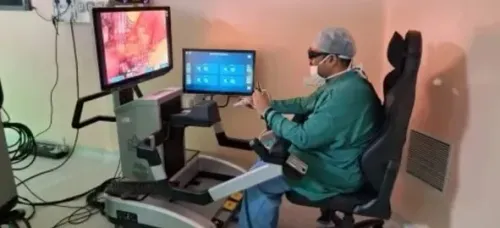
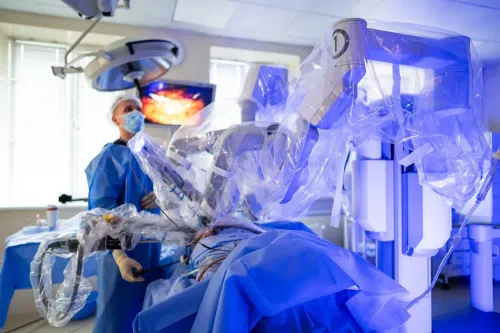
A larger incision gives open colectomy direct access to extensive, bulky or complicated disease. Laparoscopic and robotic colectomy use several smaller access incisions in suitable patients, but smaller wounds do not make every tumour removable through them.
| Approach | Main advantage | Trade-offs |
|---|---|---|
| Open | Broad access for invasion, adhesions, major bleeding or bulky disease | Larger incision, more pain and slower recovery |
| Laparoscopic | Smaller incisions and usually faster recovery than open surgery | Limited instrument movement; success depends on anatomy and surgeon experience |
| Robotic | Wristed instruments and 3D vision can help in confined or difficult dissection | Longer operating time, higher cost and limited availability; no guaranteed improvement in cancer removal, recurrence or survival |
Any minimally invasive operation can convert to open surgery. The surgeon makes that decision for uncontrolled bleeding, dense adhesions, locally advanced invasion or failure to achieve an oncologically safe resection. A highly experienced colon cancer surgeon gastrointestinal cancer surgeon in pune may still recommend open surgery when it is safer.
The bowel may be reconnected, or you may need a temporary or permanent colostomy or ileostomy. Obstruction, perforation, poor blood supply, infection risk, a low pelvic anastomosis and your overall condition influence that choice.
A stoma creates an abdominal opening for bowel output, covered by an appliance; living with one involves skin care, output management and help from a stoma nurse. Ask any gi cancer surgeon in pune how experience affects conversion and stoma decisions, rather than treating the robotic label as a cancer outcome.
How should you evaluate a colon cancer surgeon in Pune?
A result labelled colon cancer surgeon in Pune, gastrointestinal cancer surgeon in Pune or cancer specialist in Pune is a search description, not a credential. Use this checklist instead:
| Check | Ask directly | What a useful answer covers |
|---|---|---|
| Registration | Which medical registration and surgical qualifications do you hold? | A verifiable registration and recognised surgical training |
| Experience | How many oncologic colectomies did you perform in the past 12 months? | Routine colorectal cancer work, not occasional cases |
| Operation | How often do you perform the proposed right- or left-sided resection? | Experience with your tumour’s location and lymph-node dissection |
| Emergency plan | If obstruction occurs, how would you choose resection, a stent or a stoma? | Clear decisions for obstruction, perforation and temporary or permanent stoma |
| Quality systems | What is your conversion-to-open rate, and how are pathology and molecular tests arranged? | Honest conversion data, complete reports and access to mismatch-repair or microsatellite-instability testing |
Ask whether complex cases reach a tumour board involving colorectal or gastrointestinal surgery, medical oncology, radiology, pathology and radiation oncology. This review matters when scans show liver or lung metastases, or when rectal involvement is suspected; limited metastases can still be assessed for surgery or local treatment.
A consultation with Dr Lalit Banswal can provide a surgical review of your biopsy, scans, resection plan and alternatives. Ask what makes surgery necessary now, what could change the plan, and who will coordinate chemotherapy, pathology follow-up and stoma care.
Related service
Gastrointestinal Cancer Surgeon In Pune Gastrointestinal Cancer Surgeon In Pune Gastrointestinal (GI) Cancer is one of the most complex and challenging cancers that affect the organs of the digestive system, including the... View service → |
Frequently asked questions
Which colon-cancer findings make surgery necessary?
A biopsy-confirmed invasive tumour that remains operable usually requires an oncologic colectomy. Stage I–III colon cancer is commonly treated by removing the affected colon segment, its mesentery, blood supply and regional lymph nodes, followed by bowel reconnection when safe.
Which tests determine whether surgery comes first?
Doctors use colonoscopy with biopsy, contrast CT scans for staging, blood tests including carcinoembryonic antigen, and assessment of the tumour’s location and complications. These findings help determine whether surgery, chemotherapy or another treatment should come first.
How does tumour location change the operation?
The tumour’s position determines which colon segment is removed and which supplying blood vessels, mesentery and regional lymph nodes are included. Right-sided, left-sided, sigmoid and transverse-colon tumours therefore require different resections.
What are the trade-offs between open, laparoscopic and robotic colectomy?
Open surgery uses a larger incision and gives direct access. Laparoscopic surgery uses several small incisions and a camera. Robotic surgery adds wristed instruments and three-dimensional visualisation. The right approach depends on tumour anatomy, prior operations, stage, surgeon expertise and your overall health.
How should you evaluate a colon cancer surgeon in Pune?
Ask how often the surgeon performs oncologic colectomy, how staging affects the treatment sequence, which approach fits your tumour, how lymph-node removal and bowel reconnection are planned, and who manages complications and follow-up. Seek a multidisciplinary plan when chemotherapy or radiation may be needed.
Keywords