
Choosing the right specialist starts with identifying the tumour’s origin, extent and effect on liver function—not with booking an operation by name. You will learn who needs an HPB surgeon, which records to send, what questions to ask and how doctors decide whether surgery, another treatment or urgent assessment is appropriate.
Key takeaways
- Book an HPB consultation for a liver mass, jaundice or persistent right-upper-abdominal pain.
- Confirm the cancer type and stage before agreeing to an operation.
- Ask how liver reserve, tumour location and future liver remnant affect resection safety.
- Send scans, biopsy reports, blood tests and medication details with your booking request.
When an HPB consultation is more appropriate than a general cancer appointment
Jaundice, unexplained weight loss, persistent right-upper-abdominal pain, abdominal swelling, or an abnormal liver mass on ultrasound, CT or MRI warrants review by an HPB surgeon rather than only a general oncologist, gastroenterologist, hepatologist or general surgeon.
Diagnostic uncertainty about whether a mass arises from the liver, bile ducts or gallbladder is another reason to seek a liver cancer specialist in Pune.
| Situation | What to do |
|---|---|
| Routine symptoms or scan finding | Request an HPB consultation for review of multiphase imaging, liver function, tumour location and staging. |
| Urgent warning signs | Seek prompt medical care for jaundice with fever or chills, worsening pain, confusion, vomiting blood, black stools, severe vomiting or rapidly increasing abdominal swelling. Do not wait for a routine booking. |
An HPB team is especially relevant when treatment could involve liver resection, bile-duct surgery, gallbladder surgery, vascular reconstruction or complex staging. Perihilar bile-duct disease, central tumours and lesions near major vessels require different planning from a simple peripheral liver resection.
At consultation, ask whether the case needs additional imaging, endoscopy, biopsy, anaesthesia assessment, liver-volume calculation or systemic treatment. A booking is a consultation request, not proof that surgery is indicated; the team must assess both resectability and operability before recommending an operation.
Identify the cancer before you book an operation
Do not book an operation until the tumour’s origin is clear. Hepatocellular carcinoma (HCC) starts in liver cells; intrahepatic cholangiocarcinoma starts in bile ducts within the liver; perihilar cholangiocarcinoma arises where the right and left hepatic ducts join.
Gallbladder cancer begins in the gallbladder, while colorectal, pancreatic, breast and other cancers can spread to the liver as metastases.
| Disease | Usual treatment direction |
|---|---|
| HCC | Resection, ablation or transplant in selected patients; systemic drugs for advanced disease |
| Intrahepatic cholangiocarcinoma | Liver resection when removable; chemotherapy, targeted or immunotherapy when advanced |
| Perihilar cholangiocarcinoma | Bile duct resection, major hepatectomy, lymph-node assessment and biliary reconstruction; systemic treatment when unresectable |
| Gallbladder cancer | Gallbladder removal with adjacent liver and lymph-node surgery when appropriate; systemic treatment by stage |
| Metastases | Treatment of the original cancer, liver surgery or ablation in selected cases, and cancer-specific drug treatment |
The work-up for hpb cancer surgery in pune should include multiphase contrast liver CT or liver MRI, chest imaging, bilirubin, albumin, liver enzymes, platelet count, kidney function and clotting tests. Doctors assess performance status, tumour number and distribution, vascular or bile-duct involvement, and cancer outside the liver.
AFP supports evaluation of suspected HCC. CA 19-9 helps assess biliary or pancreatic disease, but neither marker establishes a diagnosis alone. In a cirrhotic or high-risk liver, characteristic arterial enhancement with venous or delayed washout can diagnose HCC without automatic biopsy. An indeterminate scan calls for repeat imaging, multidisciplinary review or biopsy.
How doctors decide whether liver resection is safe and feasible
Resectability asks whether doctors can remove the tumour with clear margins while preserving essential portal veins, hepatic veins and bile ducts. Operability asks whether your body can safely withstand the operation; a removable tumour can still be unsafe if liver reserve or general health is poor.
1. Doctors review multiphase contrast CT or liver MRI for tumour size, location, number and distribution. They look for portal-vein or hepatic-vein involvement, bile-duct extension and spread outside the liver. A small peripheral lesion may suit a limited resection, while a central, multifocal or vessel-involving tumour may require a major hepatectomy or may be unresectable.
2. The team calculates the future liver remnant: the functioning liver left after surgery. They assess cirrhosis and portal hypertension, then review bilirubin, albumin, platelet count, clotting results, kidney function, heart and lung fitness, nutrition and performance status. Too little healthy remnant increases the risk of post-hepatectomy liver failure.
3. If a planned major resection would leave too little liver, portal-vein embolisation can redirect blood flow and encourage the future remnant to grow before surgery. It is preparation for selected patients, not a guarantee that resection will become possible.
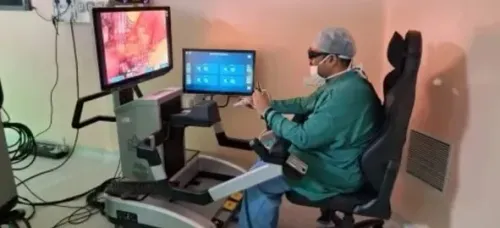
Laparoscopic or robotic resection suits selected accessible lesions. Large, central, multifocal or vascularly invasive tumours may need open surgery. Complex cholangiocarcinoma can require bile-duct resection, major hepatectomy, lymph-node assessment and biliary reconstruction, so the liver cancer surgery booking should include specialist HPB review.
Compare the treatment routes before agreeing to HPB cancer surgery
Resection fits removable disease when enough functioning liver will remain. Ablation suits selected small, accessible tumours when resection is unsuitable. Transplantation suits carefully selected early hepatocellular carcinoma, treating both the tumour and the cirrhotic liver. These routes are not interchangeable: “liver cancer surgery” does not identify a treatment.
| Option | What it does | When it applies |
|---|---|---|
| Liver resection | Removes the tumour-bearing liver segment | Resectable disease with adequate liver reserve |
| Ablation | Destroys a tumour without removing liver | Small, accessible tumours when surgery is unsuitable |
| Transplantation | Replaces the tumour-bearing cirrhotic liver | Early HCC meeting selection criteria |
| Transarterial treatment | Delivers treatment through tumour-feeding arteries | Unresectable liver-confined disease |
| Systemic therapy | Treats cancer throughout the body | Advanced, unresectable or metastatic disease |
| Radiation | Targets selected tumour sites | Local control when other routes are unsuitable |
| Surveillance | Monitors disease with scans and blood tests | Very slow-growing disease or patients unable to undergo treatment |
The Milan criteria commonly guide early HCC transplant assessment: one tumour up to 5 cm, or up to three tumours each no more than 3 cm, without major vascular invasion or spread outside the liver. Liver function, diagnosis, stage and medical fitness still determine eligibility.
- What is the exact diagnosis, tumour size and location?
- Are vessels or bile ducts involved, and is it resectable?
- What operation is proposed, and what alternatives exist?
- Who will perform it, and what is their HPB experience?
- What happens if surgery cannot proceed?
Prepare a complete booking request for an HPB specialist near Pune
Send a complete record set before requesting a liver cancer specialist in Pune. Missing scan files or old blood results can delay staging and force a repeat appointment.
- Pathology report, if a biopsy was performed
- Actual contrast CT or MRI image files, not only the written reports
- Ultrasound findings and reports
- Recent bilirubin, albumin, ALT, AST, ALP, platelet count, creatinine, clotting tests and kidney-function results
- Hepatitis B and hepatitis C results
- Records of previous operations, chemotherapy, immunotherapy, ablation or radiation
- Every current medicine, including anticoagulants, plus drug and contrast allergies
- A short history of symptoms, previous operations, cirrhosis, diabetes and other major illnesses
For a liver cancer surgery booking, ask these questions before travelling:
| Question | Why it matters |
|---|---|
| Which surgeon will operate? | Confirms who is responsible for the procedure |
| Will an HPB or liver-transplant multidisciplinary team review the case? | Brings surgery, radiology, oncology and transplant expertise together |
| What is the expected future liver remnant? | Removing too much functioning liver can cause liver failure |
| Will liver-volume calculation, anaesthesia assessment or portal-vein embolisation be needed? | Identifies preparation before major resection |
| Could vascular or bile-duct reconstruction be required? | Signals a more complex operation |
| What is the fallback plan if the tumour is unresectable? | Clarifies alternatives before surgery |
Dr Lalit Banswal’s surgical-oncology and HPB consultation services in Pune can assess this information, but HPB cancer surgery in Pune is not confirmed by booking: the appointment determines the pathway, which may include further imaging, biopsy, systemic treatment or surveillance rather than an operation.
Related service
HPB Cancer Surgery in Pune Dr. Lalit Banswal, a highly experienced and renowned HPB Cancer Surgeon in Pune, offers comprehensive care for patients suffering from liver,... View service → |
Frequently asked questions
When is an HPB consultation more appropriate than a general cancer appointment?
Choose an HPB consultation for an abnormal liver mass, jaundice, unexplained weight loss, abdominal swelling or persistent right-upper-abdominal pain. An HPB surgeon assesses liver, bile-duct and pancreas conditions alongside surgical options.
What should be identified before booking liver cancer surgery?
Confirm whether the mass is primary liver cancer, bile-duct cancer, a metastasis or a non-cancerous lesion. Doctors use contrast-enhanced CT or MRI, blood tests and a biopsy when appropriate to establish diagnosis and stage.
How do doctors decide whether liver resection is safe?
They assess tumour size and position, blood-vessel or bile-duct involvement, liver function, cirrhosis or portal hypertension, overall fitness and the amount of liver that will remain after resection.
What treatment routes should you compare before HPB cancer surgery?
Compare liver resection with ablation, transarterial treatments, systemic therapy, radiation or transplant assessment when relevant. The choice depends on cancer type, stage, liver reserve and whether the disease has spread.
What should you include in a liver cancer surgery booking request near Pune?
Include your symptoms, diagnosis, previous treatment, current medicines, allergies, medical conditions, recent blood tests, biopsy reports and the complete CT or MRI image files with radiology reports.
Keywords