
A persistent mouth sore is not automatically cancer, but it should not be judged by appearance alone when it lasts beyond two weeks or comes with bleeding, numbness, a neck lump, or difficulty swallowing. You will learn which specialist to consult, what testing should happen before treatment, and how to compare precision surgery options without relying on labels such as robotic, laser, or advanced.
Key takeaways
- Get persistent mouth sores, red or white patches, and unexplained lumps examined.
- Ask which biopsy type, pathology report and imaging tests confirm the diagnosis.
- Request the cancer stage, surgical margins, neck treatment plan and reconstruction options.
- Compare team experience, pathology review, anaesthesia care and recovery support before consenting.
Which mouth changes need an oral cancer specialist?
An oral cancer specialist in Pune evaluates suspicious and confirmed cancers of the lip, front two-thirds of the tongue, floor of mouth, inner cheek, gums, hard palate, retromolar area and selected soft-palate lesions, along with precancerous patches.
The tonsils, base of tongue, posterior pharyngeal wall and much of the soft palate belong to the oropharynx, which can use different staging and HPV or p16 assessment.
| Change | More consistent with a benign cause | Needs examination |
|---|---|---|
| Ulcer | Improves after removing a sharp tooth, denture irritation or trauma | Lasts two weeks or has no clear cause |
| White patch | Settles after treatment for fungal infection | Persists or thickens |
| Gum soreness | Improves when gum disease is treated | Bleeding, numbness or a loose tooth remains |
| Lump or patch | Shrinks after removing irritation | Persists, bleeds, or occurs with a neck lump |
A mouth cancer specialist in Pune should examine you if any warning sign lasts two weeks: a sore, lump, red or white patch, unexplained bleeding, loose tooth, numbness, chewing or swallowing difficulty, persistent hoarseness or reduced tongue movement. Arrange assessment sooner when several signs occur together.
Do not rely on appearance alone. A clinician inspects the whole mouth and neck, examines hidden areas with a mirror or flexible scope when needed, and preserves tissue for pathology: an incisional biopsy suits a large or deep lesion, an excisional biopsy a small accessible lesion, and needle sampling a neck lump or lymph node.
Removing a suspicious lesion without histopathology can leave the diagnosis and treatment plan uncertain.
What happens at the first examination and biopsy?
The first examination maps the problem before anyone chooses treatment. The clinician inspects the entire mouth, records the site and appearance, and measures or photographs the lesion when useful. They palpate the neck for enlarged or firm lymph nodes.
If the lesion cannot be fully seen, the clinician examines the throat with a mirror or flexible scope. This matters because a hidden extension can change the biopsy site, imaging plan and treatment discussion. An oral cancer surgeon in Pune or mouth cancer specialist in Pune should explain each step and provide the pathology report.
Biopsy choice depends on the lesion:
| Type | What it involves | When it fits |
|---|---|---|
| Incisional biopsy | Removes a representative tissue sample | A large, deep or suspicious lesion that should not be removed in one piece |
| Excisional biopsy | Removes the lesion completely | A small, accessible lesion when complete removal is clinically appropriate |
| Needle sampling | Draws cells or tissue through a needle | A neck lump or suspected lymph node |
A pathologist’s examination of preserved tissue is the definitive diagnostic step. Removing a suspicious lesion without sending a specimen for histopathology is unsafe: it can erase evidence of tumour type, depth and margins, leaving the next clinician without reliable staging information.
The pathology report should identify tumour type and grade, depth of invasion, perineural invasion, lymphovascular invasion and margin status. HPV or p16 testing belongs in the report when the tumour site makes it relevant. Ask whether slides or paraffin blocks can be sent for a second pathology review.
How does precision cancer surgery planning establish stage and surgical scope?
Precision cancer surgery in Pune should mean a documented planning process, not a guarantee of cure. The team maps the primary tumour, confirms biopsy findings, assesses bone and soft-tissue involvement, estimates neck-node risk, plans margins, and selects reconstruction and additional treatment.
Clinical examination covers the mouth and neck; contrast CT or MRI of the head and neck defines local and nodal disease.
| Investigation | What it answers | Important limit |
|---|---|---|
| Neck ultrasound with needle sampling | Whether a suspicious node contains tumour | Samples the node, not the mouth lesion |
| Chest imaging | Whether lung disease or another chest finding affects staging | Does not replace head-and-neck assessment |
| PET-CT | Searches for metabolically active nodal or distant disease when indicated | It does not replace biopsy and is not automatic for every small lesion |
T means the primary tumour, N means regional lymph nodes, and M means distant spread; the overall stage is the combined stage group. Depth of invasion matters in oral cavity cancer: a small-looking lesion that extends deeply can carry important stage and neck-risk implications.
Surgery may remove part of the tongue or floor of mouth, involved jawbone, and cervical lymph nodes, followed by reconstruction. A frozen section helps check selected margins during surgery, but permanent pathology remains necessary.
The closest margin, node count, extranodal extension, bone invasion, perineural invasion and lymphovascular invasion can change recommendations for postoperative radiotherapy or chemoradiotherapy. A search for oral cancer specialist precision cancer surgery in pune should therefore focus on this recorded pathway, not the phrase alone.
How do you verify the right oral cancer surgical team in Pune?
Search phrases are not qualifications. To compare an oral cancer surgeon in Pune, verify recognized specialty training, hospital privileges, head-and-neck cancer workload, pathology support and a multidisciplinary tumour board.
| Role | Main responsibility |
|---|---|
| Head-and-neck surgical oncologist | Removes oral tumours and manages neck nodes |
| Maxillofacial surgeon | Treats jaw, facial bone and oral structural problems |
| ENT surgeon | Assesses throat, voice, airway and related neck disease |
| Radiation oncologist | Plans radiotherapy |
| Medical oncologist | Manages chemotherapy, immunotherapy or other systemic treatment |
| Reconstructive surgeon | Restores jaw continuity, tissue separation and function |
| Speech and swallowing therapist | Rebuilds communication and swallowing skills |
| Dietitian | Manages calorie, protein and tube-feeding needs |
Ask each team:
- How many oral cavity cancer operations do you perform each year?
- Which subsites do you treat: tongue, floor of mouth, gums, cheek, palate, lip or retromolar area?
- Do you perform neck dissections, or coordinate them with another surgeon?
- Which reconstructive surgeons are available, and are free-flap services hospital-based?
- Which head-and-neck specialists attend the tumour board?
- Who reviews pathology, and can slides or tissue blocks receive a second opinion?
Gastrointestinal, liver, pancreas, general robotic or laparoscopic experience does not establish oral cavity and neck oncology expertise. Precision cancer surgery in Pune should describe documented planning, not a separate qualification.
When reviewing Dr Lalit Banswal as a possible oral cancer specialist in Pune, request oral-cancer-specific case experience, team structure, pathology arrangements and hospital-based treatment details rather than relying on a broad cancer or precision-surgery description.
Which treatment and recovery questions should you ask before consenting?
Your decision should match the tumour, not the label “precision” or “robotic.” Treatment may involve surgery, radiotherapy, systemic therapy or combinations, depending on site, stage, resectability, pathology and fitness. A service described as an oral cancer specialist or precision cancer surgery in Pune still needs this documented plan.
Reconstruction is functional cancer planning. A local repair, regional flap or free flap can restore jaw continuity, separate the mouth from the neck, protect vital structures, and support speech, swallowing and nutrition.
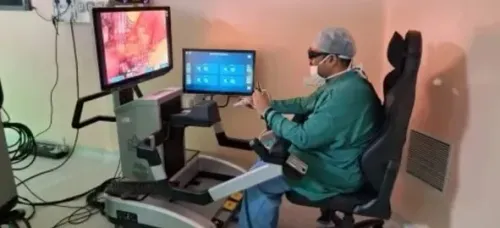
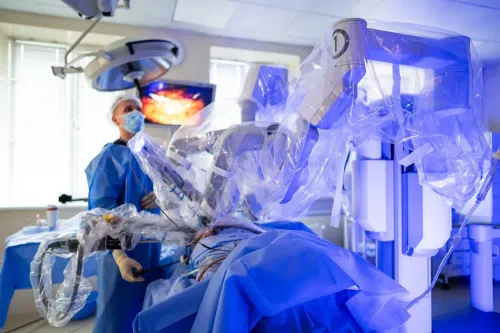
Transoral robotic surgery suits selected, accessible tumours, especially some oropharyngeal lesions; it does not suit every mouth tumour and may still require neck dissection, reconstruction or postoperative radiation.
| Option | Main role | Important limitation |
|---|---|---|
| Surgery | Removes a resectable primary tumour and may treat neck nodes | Can affect speech, swallowing, appearance or nutrition |
| Radiotherapy | Treats selected tumours or remaining microscopic disease | Can cause mouth dryness, soreness and swallowing problems |
| Systemic therapy | Treats disease requiring drug treatment | The drug and purpose depend on pathology and stage |
| Combined treatment | Adds treatments when one approach is insufficient | Recovery and side effects become more extensive |
Ask before signing consent:
- What effects do you expect on speech, swallowing, appearance, nutrition and neck movement?
- What is the closest planned margin, and will the neck be treated despite no palpable node?
- Which final pathology findings could change the plan?
- Who will manage speech, swallowing, nutrition and other rehabilitation?
- What are the confirmed TNM stage and the alternatives?
Obtain the biopsy report, and request slides or blocks when review is appropriate. Ask whether a head-and-neck multidisciplinary team discussed your case.
Frequently asked questions
Which mouth changes need an oral cancer specialist?
Arrange an examination for a mouth ulcer lasting longer than two weeks, a persistent red or white patch, a lump, unexplained bleeding, numbness, loose teeth, difficulty chewing or swallowing, restricted tongue movement, or a neck lump. Tobacco, areca nut, alcohol and previous oral lesions increase concern but do not determine the diagnosis.
What happens at the first examination and biopsy?
The specialist records symptoms and risk factors, checks the lips, tongue, gums, cheeks, palate, floor of mouth and neck, and documents the lesion’s size and location. A biopsy removes a tissue sample for histopathology; the report identifies whether cancer is present and describes its type and grade.
How does precision cancer surgery planning establish stage and surgical scope?
The team combines examination findings, biopsy results and imaging such as contrast CT or MRI. It then assesses tumour size, depth of invasion, nearby bone or muscle involvement, neck lymph nodes and distant spread to decide the operation, margin, neck dissection and reconstruction plan.
How do you verify the right oral cancer surgical team in Pune?
Ask who will perform the operation, how pathology and scans are reviewed, how margins and neck nodes are assessed, and which specialists manage reconstruction, anaesthesia, nutrition and rehabilitation. Confirm that the written plan names the proposed operation and alternatives.
Which treatment and recovery questions should you ask before consenting?
Ask about the operation’s purpose, expected margin, possible neck dissection, reconstruction, speech and swallowing effects, feeding-tube likelihood, hospital stay, wound care, follow-up schedule, adjuvant radiotherapy or chemotherapy, complications and the timeframe for returning to normal activities.
Keywords