Oral Cavity Cancer (Mouth Cancer): Don't Ignore a Non-Healing Mouth Ulcer
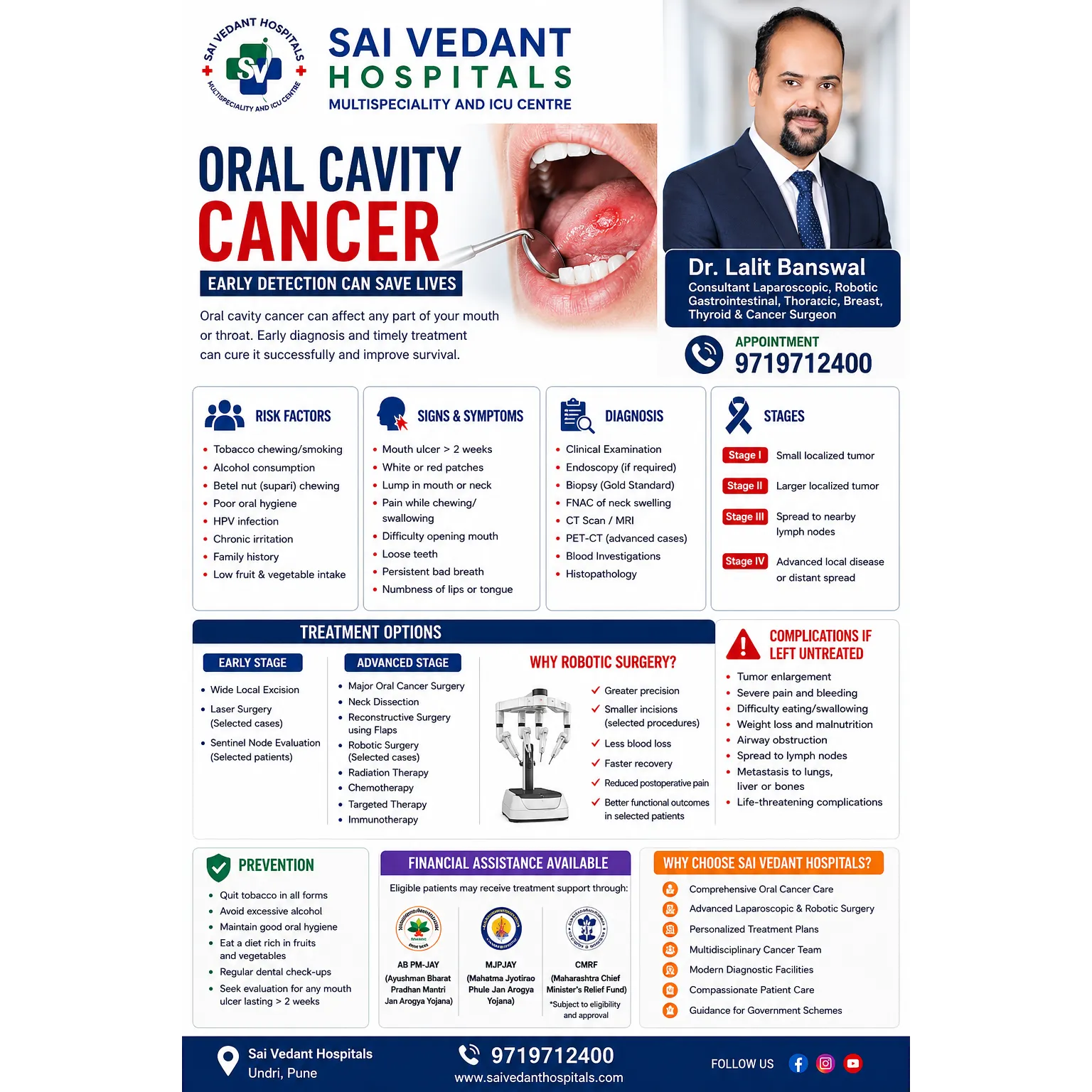
Persistent mouth ulcers, white or red patches, difficulty swallowing, or a lump in the mouth should never be ignored. Early diagnosis significantly improves treatment success and survival.
What is Oral Cavity Cancer?
Oral cavity cancer is a malignant tumor that develops in the lips, tongue, cheeks, floor of the mouth, hard palate, gums, or retromolar region. Most oral cancers are Squamous Cell Carcinoma (SCC), arising from the lining of the mouth.
Pathophysiology
Repeated exposure to carcinogens causes genetic mutations in oral epithelial cells.
➡️ Chronic irritation and DNA damage
➡️ Precancerous lesions (Leukoplakia/Erythroplakia)
➡️ Dysplasia
➡️ Carcinoma in situ
➡️ Invasive Squamous Cell Carcinoma
➡️ Spread to lymph nodes and distant organs if untreated
Risk Factors
✅ Tobacco chewing (Gutkha, Khaini, Pan Masala)
✅ Smoking (Cigarettes/Bidis)
✅ Alcohol consumption
✅ Betel nut (Supari) chewing
✅ Poor oral hygiene
✅ HPV infection (selected cases)
✅ Chronic irritation from sharp teeth or ill-fitting dentures
✅ Family history
✅ Low fruit and vegetable intake
Common Signs & Symptoms
🔹 Mouth ulcer lasting more than 2 weeks
🔹 White or red patches inside the mouth
🔹 Lump in the mouth or neck
🔹 Pain while chewing or swallowing
🔹 Difficulty opening the mouth (Trismus)
🔹 Loose teeth without obvious cause
🔹 Persistent bad breath
🔹 Numbness of lips or tongue
🔹 Voice changes
🔹 Ear pain
Diagnosis
✔ Complete oral examination
✔ Flexible endoscopy (if required)
✔ Biopsy (Gold Standard)
✔ FNAC of neck swelling
✔ CT Scan / MRI
✔ PET-CT for advanced disease
✔ Blood investigations
✔ Histopathology
Staging
Stage I: Small localized tumor
Stage II: Larger localized tumor
Stage III: Spread to nearby lymph nodes
Stage IV: Advanced local disease or distant spread
Treatment Options
Early Stage
✅ Wide Local Excision
✅ Laser Surgery (Selected cases)
✅ Sentinel Node Evaluation (Selected patients)
Advanced Stage
✅ Major Oral Cancer Surgery
✅ Neck Dissection
✅ Reconstructive Surgery using Flaps
✅ Robotic Surgery (Selected cases)
✅ Radiation Therapy
✅ Chemotherapy
✅ Targeted Therapy
✅ Immunotherapy
Why Robotic Surgery?
✔ Greater precision
✔ Smaller incisions (selected procedures)
✔ Less blood loss
✔ Faster recovery
✔ Reduced postoperative pain
✔ Better functional outcomes in selected patients
Complications if Left Untreated
❌ Tumor enlargement
❌ Severe pain and bleeding
❌ Difficulty eating and swallowing
❌ Weight loss and malnutrition
❌ Airway obstruction
❌ Spread to neck lymph nodes
❌ Metastasis to lungs, liver, or bones
❌ Life-threatening complications
Prevention
✔ Quit tobacco in all forms
✔ Avoid excessive alcohol
✔ Maintain good oral hygiene
✔ Eat a diet rich in fruits and vegetables
✔ Regular dental check-ups
✔ Seek evaluation for any mouth ulcer lasting more than 2 weeks
Financial Assistance Available
Eligible patients may receive treatment support through:
✅ AB PM-JAY (Ayushman Bharat Pradhan Mantri Jan Arogya Yojana)
✅ Mahatma Jyotirao Phule Jan Arogya Yojana (MJPJAY)
✅ Maharashtra Chief Minister's Relief Fund (CMRF) (subject to eligibility and approval)
Why Choose SaiVedant Hospital?
✔ Comprehensive Oral Cancer Care
✔ Advanced Laparoscopic & Robotic Surgery
✔ Personalized Treatment Plans
✔ Multidisciplinary Cancer Team
✔ Modern Diagnostic Facilities
✔ Compassionate Patient Care
✔ Guidance for Government Health Schemes
📞 Book Your Consultation Today
Dr. Lalit Banswal
Consultant Laparoscopic, Robotic Gastrointestinal, Thoracic, Breast, Thyroid & Cancer Surgeon
🏥 SaiVedant Hospital, Undri, Pune
📞 Appointment: 9719712400
Persistent mouth ulcers, white or red patches, difficulty swallowing, or a lump in the mouth should never be ignored. Early diagnosis significantly improves treatment success and survival.
What is Oral Cavity Cancer?
Oral cavity cancer is a malignant tumor that develops in the lips, tongue, cheeks, floor of the mouth, hard palate, gums, or retromolar region. Most oral cancers are Squamous Cell Carcinoma (SCC), arising from the lining of the mouth.
Pathophysiology
Repeated exposure to carcinogens causes genetic mutations in oral epithelial cells.
➡️ Chronic irritation and DNA damage
➡️ Precancerous lesions (Leukoplakia/Erythroplakia)
➡️ Dysplasia
➡️ Carcinoma in situ
➡️ Invasive Squamous Cell Carcinoma
➡️ Spread to lymph nodes and distant organs if untreated
Risk Factors
✅ Tobacco chewing (Gutkha, Khaini, Pan Masala)
✅ Smoking (Cigarettes/Bidis)
✅ Alcohol consumption
✅ Betel nut (Supari) chewing
✅ Poor oral hygiene
✅ HPV infection (selected cases)
✅ Chronic irritation from sharp teeth or ill-fitting dentures
✅ Family history
✅ Low fruit and vegetable intake
Common Signs & Symptoms
🔹 Mouth ulcer lasting more than 2 weeks
🔹 White or red patches inside the mouth
🔹 Lump in the mouth or neck
🔹 Pain while chewing or swallowing
🔹 Difficulty opening the mouth (Trismus)
🔹 Loose teeth without obvious cause
🔹 Persistent bad breath
🔹 Numbness of lips or tongue
🔹 Voice changes
🔹 Ear pain
Diagnosis
✔ Complete oral examination
✔ Flexible endoscopy (if required)
✔ Biopsy (Gold Standard)
✔ FNAC of neck swelling
✔ CT Scan / MRI
✔ PET-CT for advanced disease
✔ Blood investigations
✔ Histopathology
Staging
Stage I: Small localized tumor
Stage II: Larger localized tumor
Stage III: Spread to nearby lymph nodes
Stage IV: Advanced local disease or distant spread
Treatment Options
Early Stage
✅ Wide Local Excision
✅ Laser Surgery (Selected cases)
✅ Sentinel Node Evaluation (Selected patients)
Advanced Stage
✅ Major Oral Cancer Surgery
✅ Neck Dissection
✅ Reconstructive Surgery using Flaps
✅ Robotic Surgery (Selected cases)
✅ Radiation Therapy
✅ Chemotherapy
✅ Targeted Therapy
✅ Immunotherapy
Why Robotic Surgery?
✔ Greater precision
✔ Smaller incisions (selected procedures)
✔ Less blood loss
✔ Faster recovery
✔ Reduced postoperative pain
✔ Better functional outcomes in selected patients
Complications if Left Untreated
❌ Tumor enlargement
❌ Severe pain and bleeding
❌ Difficulty eating and swallowing
❌ Weight loss and malnutrition
❌ Airway obstruction
❌ Spread to neck lymph nodes
❌ Metastasis to lungs, liver, or bones
❌ Life-threatening complications
Prevention
✔ Quit tobacco in all forms
✔ Avoid excessive alcohol
✔ Maintain good oral hygiene
✔ Eat a diet rich in fruits and vegetables
✔ Regular dental check-ups
✔ Seek evaluation for any mouth ulcer lasting more than 2 weeks
Financial Assistance Available
Eligible patients may receive treatment support through:
✅ AB PM-JAY (Ayushman Bharat Pradhan Mantri Jan Arogya Yojana)
✅ Mahatma Jyotirao Phule Jan Arogya Yojana (MJPJAY)
✅ Maharashtra Chief Minister's Relief Fund (CMRF) (subject to eligibility and approval)
Why Choose SaiVedant Hospital?
✔ Comprehensive Oral Cancer Care
✔ Advanced Laparoscopic & Robotic Surgery
✔ Personalized Treatment Plans
✔ Multidisciplinary Cancer Team
✔ Modern Diagnostic Facilities
✔ Compassionate Patient Care
✔ Guidance for Government Health Schemes
📞 Book Your Consultation Today
Dr. Lalit Banswal
Consultant Laparoscopic, Robotic Gastrointestinal, Thoracic, Breast, Thyroid & Cancer Surgeon
🏥 SaiVedant Hospital, Undri, Pune
📞 Appointment: 9719712400
Keywords