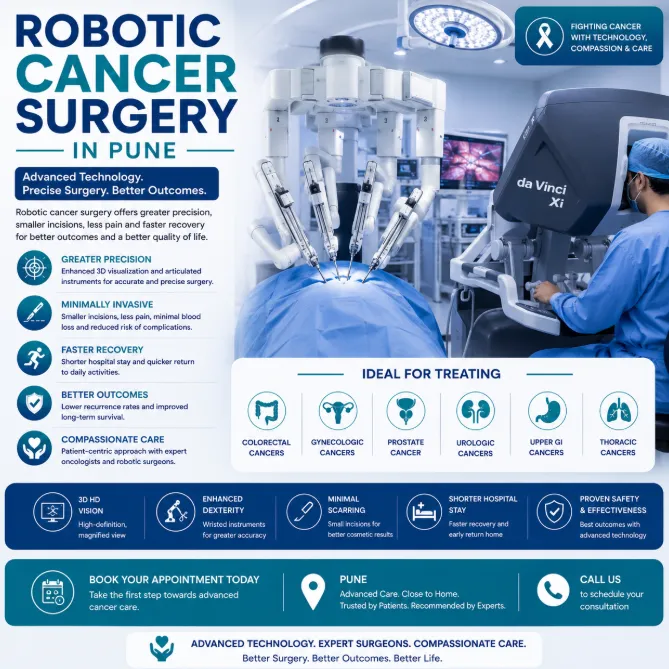
Robotic surgery is one of several minimally invasive techniques used in modern surgical care. In selected cancer operations, it allows the surgeon to control specialised instruments through small incisions while viewing an enlarged, three-dimensional image of the operating area.
Patients searching for a robotic cancer surgeon in Pune often want to know whether the technique is safer, less painful or more effective than conventional surgery. The answer depends on the cancer type, its stage, the proposed procedure and the patient’s individual condition.
How robotic surgery works
Despite its name, the robotic system does not perform an operation independently. Every movement is directed by the surgeon from a nearby console. The system translates those movements into precise actions using instruments placed through small ports in the patient’s body.
Robotic platforms may offer:
- Magnified three-dimensional visualisation
- Instruments capable of controlled movement in confined areas
- Smaller incisions compared with many open procedures
- Improved access to certain deep anatomical spaces
- A minimally invasive option for selected operations
These features can be useful, but they do not make robotic surgery appropriate for every cancer.
Which factors determine suitability?
The decision begins with cancer assessment rather than technology preference. A surgical oncologist considers the tumour’s size, location and relationship with surrounding structures. Previous operations, adhesions, body anatomy and other medical conditions may also affect feasibility.
Robotic surgery may be discussed for selected procedures involving areas such as the colon, rectum, reproductive organs, kidneys, prostate, thorax or parts of the head and neck. Availability does not mean it is automatically preferable in every case.
Open surgery may remain the appropriate option when a tumour is very large, involves major blood vessels, has extended into adjacent structures or requires complex reconstruction. In some situations, an operation may begin robotically but need to be converted to an open procedure for safety.
Possible recovery considerations
Because robotic procedures generally use smaller incisions, some patients may experience less incision-related discomfort and a shorter initial recovery period. Hospital stay and return to routine activities can also differ from those associated with a large open incision.
However, recovery is influenced by much more than incision size. The organ operated upon, complexity of resection, nutrition, complications and the patient’s general health all play important roles. No technique can guarantee a particular recovery time or outcome.
Surgical principles remain unchanged
Whether an operation is open, laparoscopic or robotic, core cancer-surgery principles still apply. These include removing the tumour appropriately, obtaining suitable margins, assessing relevant lymph nodes and avoiding unnecessary disruption of nearby structures.
The technique should support these objectives rather than replace them. The surgeon’s training, experience with the procedure and ability to manage unexpected findings are therefore important considerations.
Dr Lalit Banswal assesses patients requiring cancer surgery in Pune by reviewing the diagnosis, imaging and disease extent before discussing whether a robotic approach is technically and oncologically suitable.
What to ask during a consultation
Patients considering robotic surgery can ask:
- Why is this approach being recommended for my condition?
- What are the alternatives?
- How frequently is this particular procedure performed robotically?
- Could the operation require conversion to open surgery?
- What complications are associated with the procedure?
- Will the choice of technique affect further cancer treatment?
Choosing a robotic cancer surgeon in Pune should involve more than checking whether the technology is available. The key question is whether the proposed approach supports safe, appropriate cancer removal for the individual diagnosis.
Keywords