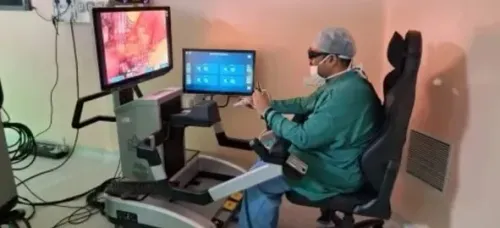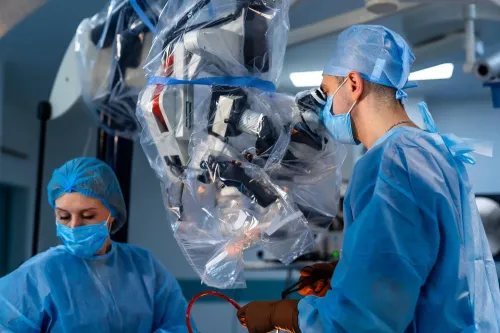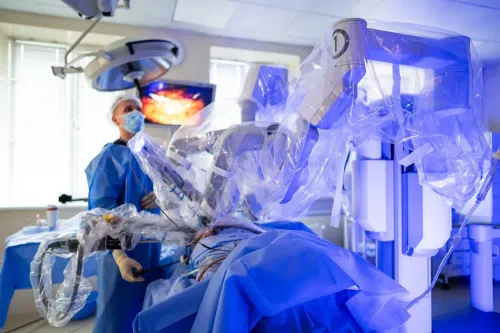
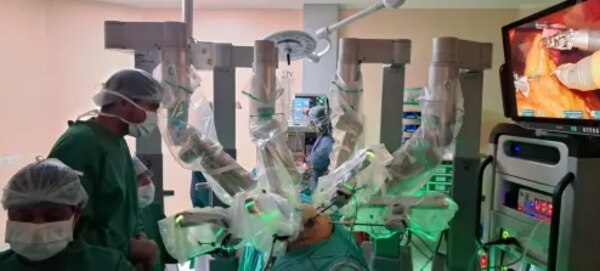
A robot is useful only when the tumour’s location, depth and required margins make a transoral operation safe and complete. By comparing the tumour site, neck treatment, reconstruction needs, functional trade-offs and the surgeon’s evidence, you can judge which operation fits your cancer rather than choosing by the size of the incision.
Key takeaways
- TORS mainly treats selected deep oropharyngeal tumours, not every oral cavity cancer.
- Ask whether the tumour is in the oral cavity or oropharynx.
- Request the planned margins, lymph-node treatment, reconstruction and recovery details.
- Choose the operation that removes all cancer safely, not simply the least invasive option.
Which oral cancers can actually be reached through the mouth?
Oral cavity cancer starts in the mouth: the mobile tongue, floor of mouth, cheek lining, gums or hard palate. Oropharyngeal cancer starts farther back, including the tonsils and base of tongue. That distinction matters because TORS is designed mainly for selected deep oropharyngeal tumours, not every cancer visible through the mouth.
| Site | Usual transoral option | When it fits |
|---|---|---|
| Selected tonsil or base-of-tongue oropharyngeal tumour | TORS | The tumour is reachable, confined enough for safe removal, and a clear margin is achievable |
| Mobile tongue, floor of mouth, cheek, gum or hard-palate cancer | Conventional transoral excision or open resection | The surgeon can expose and remove the lesion with adequate depth and margins |
| Tumour involving jaw, skin, major vessels or extensive floor of mouth | Open surgery, often with reconstruction | Direct exposure and immediate repair are required |
TORS may provide access to selected difficult sites while avoiding some external incisions. It does not automatically deliver greater precision cancer surgery or better cancer control. The removed specimen, not the robotic camera view, proves whether the margin is clear.
Suitability depends on tumour size, depth, mouth opening and the route to the lesion. Jaw invasion, proximity to major neck vessels, nodal spread, previous radiation and the need for a flap can make TORS unsafe or incomplete. If the surgeon cannot remove the tumour intact with a clear margin, open treatment is the better route.
What changes between robotic and open surgery?
TORS removes a selected primary tumour through the mouth, avoiding some external facial or neck incisions. Open surgery uses a neck incision, lip-split incision or jaw-splitting access when direct exposure is needed.
Both operations pursue the same oncologic goal: remove the tumour with an adequate margin of healthy tissue. The removed specimen, examined by pathology, determines whether the margin is clear—not the camera view or the surgeon’s impression during robotic cancer surgery.
| Approach | Access to primary tumour | Neck treatment | Reconstruction |
|---|---|---|---|
| TORS | Through the mouth; avoids some external incisions | Selective or modified radical neck dissection may still be required through a separate neck incision or a combined approach | A regional flap or microvascular free flap may still be needed |
| Open surgery | Neck, lip-split or jaw-splitting access when direct exposure is required | Selective or modified radical neck dissection can be performed through the same or a separate neck incision | Reconstruction can restore the lining, tongue or jaw contour, swallowing and speech |
Robotic removal does not treat cervical lymph nodes. Oral cancers can spread to neck nodes even after the primary tumour is removed transorally, so the complete plan may include neck dissection, radiation or both.
TORS also does not automatically eliminate reconstruction. A large defect, jaw involvement or difficult access for flap placement can make open surgery safer. Compare the entire treatment plan—primary tumour removal, neck treatment, pathology, reconstruction and rehabilitation—not the scar alone.
How do the cancer team decide which operation is safe and complete?
The decision starts with physical examination: inspect the mouth, palpate the lesion, assess tongue movement and mouth opening, and examine the neck for enlarged nodes. A biopsy confirms the cancer type; contrast-enhanced CT or MRI maps depth, jaw involvement, tongue and neck-vessel relationships, while endoscopy assesses areas hidden from direct view.
- Review biopsy and imaging, adding PET-CT when nodal spread, distant disease or an uncertain primary requires whole-body assessment.
- Present the findings at a multidisciplinary tumour board involving head-and-neck surgery, radiology, pathology, radiation and medical oncology, dentistry, speech and swallowing therapy, and reconstruction specialists.
- Choose the route only after accounting for prior radiation, mouth opening, nodal disease, anticipated free-flap or regional-flap reconstruction, and whether the surgeon can remove the specimen intact with an adequate margin.
For oral-cavity cancer, AJCC 8th edition uses depth of invasion (DOI) in T staging: DOI over 5 mm can move a small tumour into T2, and DOI over 10 mm into T3. That deeper risk can justify elective neck treatment and influence adjuvant therapy even when the surface lesion looks small.
| Approach | Main safety question | Possible consequence |
|---|---|---|
| Robotic transoral | Can the team see and remove the tumour intact? | Avoids selected external incisions, but does not replace neck treatment or reconstruction |
| Open or combined | Do jaw, vessels, access or reconstruction require wider exposure? | Neck incision, jaw access, and regional or free flap may be needed |
Precision cancer surgery depends on staging, pathology and margin planning, not the word robotic. A margin under 5 mm is commonly called close; positive or close margins can lead to re-excision, radiation or chemoradiation according to the full pathology.
When does open surgery provide the safer treatment plan?
Open surgery is often the safer plan when cancer reaches the mandible, extensive floor of mouth, skin, major nerves or vessels, or leaves a defect that cannot be closed reliably through the mouth.
Direct exposure lets the team remove the tumour intact, control bleeding and reconstruct immediately; it is not a fallback for failed robotic cancer surgery.
| Treatment plan | Main advantage | Important trade-off |
|---|---|---|
| Open resection | Direct access for jaw, skin, vessel or nerve involvement; supports immediate reconstruction | External scar, longer recovery and possible trismus or pain |
| TORS | Access to selected deep oropharyngeal sites through the mouth, avoiding some external incisions | Delayed haemorrhage risk, limited suitability and no automatic reduction in feeding-tube use |
| Open surgery with reconstruction | Restores tissue after a large oral-cavity defect | Requires rehabilitation for swallowing, speech and chewing |
A pectoralis major or other regional flap can restore inner-mouth lining. A radial forearm or anterolateral-thigh microvascular free flap can replace lining and tongue volume, while a fibula free flap can restore jaw continuity and contour.
Reconstruction can determine the access route before tumour removal begins: the flap’s blood vessels, inset and bone fixation must be reachable and protected.
TORS can reduce hospital stay for selected deep sites, but delayed bleeding can require urgent admission, examination or surgery. Compare speech, swallowing, chewing, shoulder function, trismus, pain, feeding-tube use and rehabilitation needs rather than declaring either platform superior. Radiation, neck dissection and the size of the defect often matter more than the instrument used.
What should you ask an oral cancer specialist before consenting?
Ask an oral cancer specialist to compare complete treatment plans, not just robotic and open incisions. Use this checklist in Pune:
1. Is the tumour in the oral cavity or oropharynx? Ask why TORS is technically suitable or unsuitable based on site, size, depth, mouth opening, jaw involvement, major vessels and the ability to remove an intact specimen.
2. What margin is planned? Ask how pathology will ink, section and measure the specimen, and what happens if the margin is positive or under 5 mm.
3. Will you need a selective or modified radical neck dissection? Clarify whether it requires a separate neck incision or a combined approach; robotic removal does not replace lymph-node treatment.
4. Will reconstruction require a regional flap or microvascular free flap? Ask whether a tracheostomy or feeding tube is expected, how long each may remain, and who will provide speech, swallowing, dental and nutrition rehabilitation.
5. What are the surgeon’s recent results for this exact subsite? Request case volume, feeding-tube and tracheostomy rates, bleeding readmissions, margin results, nodal outcomes and rehabilitation support—not general robotic-surgery numbers.
6. If considering robotic oncology surgery in Pune, verify routine head-and-neck cancer practice, tumour-board planning and the full pathway with pathology, radiation and medical oncology. Dr Lalit Banswal can be one Pune surgical-oncology contact for that credential review.
Seek a second opinion when radiation, jaw or vessel involvement, major reconstruction, or a scar-based benefit drives the recommendation.
Related service
Robotic Cancer Surgery In Pune Robotic Cancer Surgery In Pune Robotic Cancer Surgery in Pune: In today’s medical landscape, surgical procedures have evolved significantly, offering patients various treatment... View service → |
Frequently asked questions
Which oral cancers can be reached through the mouth?
TORS is designed mainly for selected deep oropharyngeal tumours, including some tonsil and base-of-tongue cancers. Oral cavity cancers affecting the mobile tongue, floor of mouth, cheek lining, gums or hard palate often require a different surgical approach.
What changes between robotic and open surgery for oral cancer?
Robotic surgery uses instruments passed through the mouth, while open surgery reaches the tumour through an external incision or a wider conventional approach. The choice affects access, visibility, incisions, reconstruction and recovery, but neither approach is automatically safer for every tumour.
How do doctors decide which operation is safe and complete?
The cancer team reviews the tumour’s exact site, size, depth, spread, nearby structures, lymph nodes and imaging. They then compare whether each approach can remove the tumour with clear margins while preserving swallowing, speech and other important functions.
When does open surgery provide the safer treatment plan?
Open surgery becomes the safer plan when the tumour is in the oral cavity, extends into structures that cannot be reached reliably through the mouth, involves bone or major vessels, or requires wider access and reconstruction.
What should you ask an oral cancer specialist before consenting?
Ask where the tumour started, why the recommended approach can achieve clear margins, whether lymph nodes require treatment, what reconstruction is planned, and how surgery could affect speech, swallowing, breathing and appearance.
Keywords