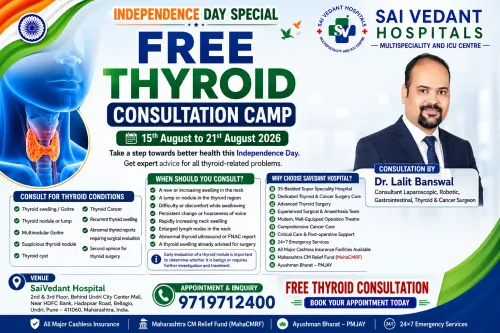
Most thyroid nodules are not cancerous, but a suspicious lump still requires proper evaluation. When testing confirms or strongly indicates thyroid cancer, surgery may become an important part of treatment. Dr Lalit Banswal assesses patients in Pune who need a surgical oncology opinion for thyroid tumours and related neck findings.
The extent of surgery should be based on the diagnosis and disease pattern rather than the presence of a thyroid lump alone.
How thyroid cancer is evaluated
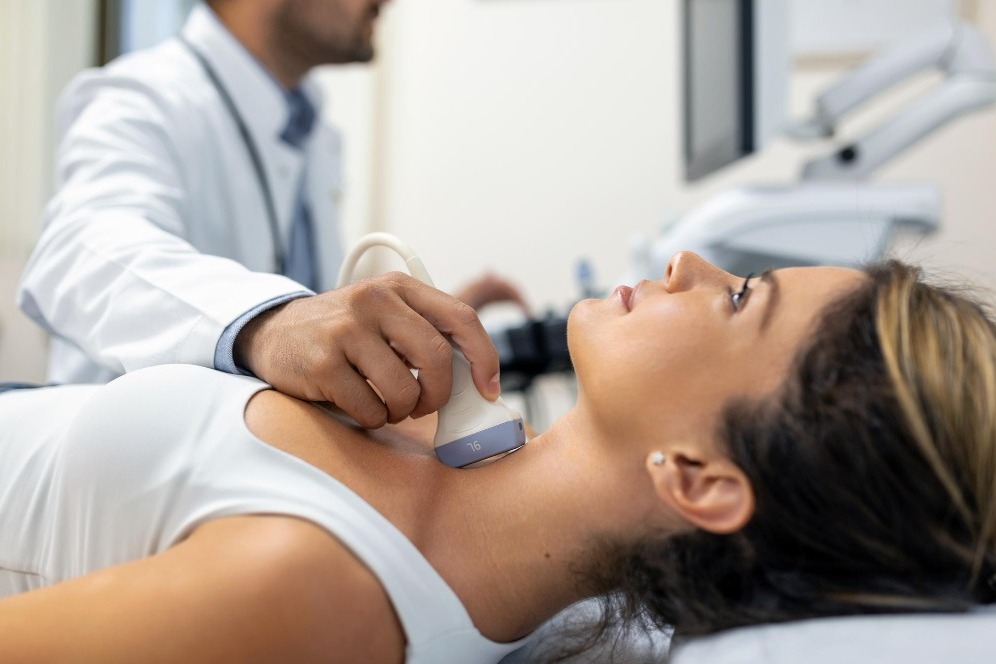
A thyroid nodule may be discovered during a neck examination or incidentally on an imaging scan. Evaluation can include:
- Neck ultrasound
- Thyroid-function blood tests
- Fine-needle aspiration cytology
- Examination of cervical lymph nodes
- Additional imaging for larger or advanced tumours
- Voice-cord assessment in selected patients
The biopsy result, ultrasound appearance, nodule size and lymph-node status help doctors determine the next step.
Partial and total thyroid removal
A thyroid lobectomy removes one side of the thyroid. It may be considered for selected small or localised tumours when the opposite lobe is unaffected.
A total thyroidectomy removes the entire thyroid gland. It may be recommended for larger tumours, disease affecting both lobes, certain tumour types or cases with other risk factors.
More extensive surgery is not automatically necessary for every patient. At the same time, an operation that is too limited may not adequately address some cancers. The surgeon should explain why a particular extent of removal is being proposed.
When lymph-node surgery is considered
Thyroid cancer can spread to lymph nodes in the central or lateral areas of the neck. Suspicious nodes may be assessed through ultrasound and needle testing.
If lymph-node involvement is confirmed or strongly suspected, selected nodes or a defined group of nodes may need to be removed. This procedure should be planned carefully because the neck contains important nerves, blood vessels and glands.
Understanding the potential risks
Structures close to the thyroid include the nerves controlling the vocal cords and the parathyroid glands, which help regulate calcium levels. Thyroid surgery can therefore carry risks such as voice changes, bleeding and low calcium.
Some effects are temporary, while others may persist. Individual risk depends on the extent of surgery, tumour involvement, previous neck operations and other clinical factors.
Patients undergoing total thyroid removal generally require long-term thyroid hormone replacement. Calcium monitoring may also be needed after surgery.
What happens after the operation?
The final pathology report confirms the tumour type, size, margins and other features. These findings help determine whether additional treatment or routine surveillance is appropriate.
Follow-up may involve blood tests, neck ultrasound and, for selected patients, radioactive iodine treatment. The schedule varies according to the cancer subtype and recurrence risk.
Choosing the right surgical approach
When evaluating a thyroid cancer surgeon in Pune, patients should consider whether the surgeon reviews the biopsy and ultrasound carefully, explains the required extent of surgery and discusses nerve, calcium and follow-up considerations clearly.
A consultation should provide realistic information rather than guarantees. Patients should leave knowing what will be removed, why the procedure is recommended and what care may be required afterward.
For a detailed review of thyroid biopsy findings and surgical options, schedule a consultation with Dr Lalit Banswal in Pune.
Keywords